Posted in American History

Challenger & Apollo 1

This week has two major NASA tragedies, so I thought I would write a post about them.  Space Flight history as been an interest of mine since I was in elementary school.  Its always seemed strange that all the major disasters that become national news (because there were some that never were big stories) happened during the last weeks of January into the first weeks of February.

Its also a reminder that despite the fact that seems almost common place now to go into space and investigate and come back, it really is a dangerous job, and things can go wrong without any warning.

Challenger Accident – January 28, 1986
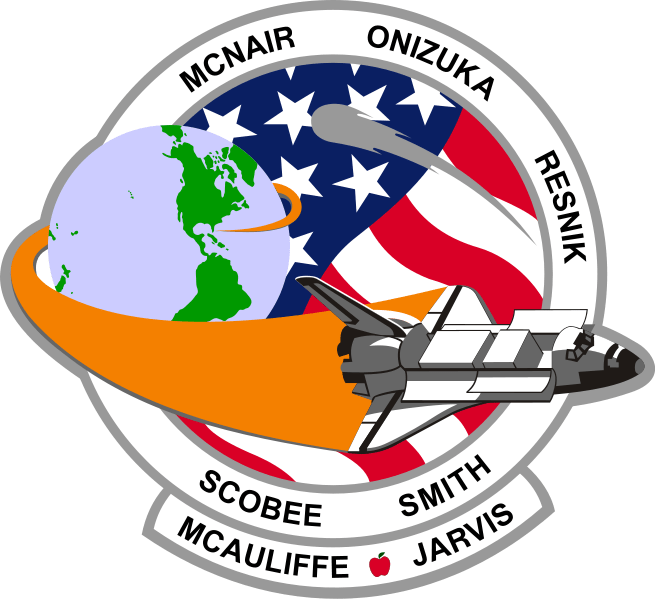
655px-STS-51-L.svg
Mission Patch for 51-L Challenger. Source: Wikipedia/Public Domain

Today is the 30th Anniversary of the Challenger Accident.

I can’t say I ‘remember’ the incident.  I was only a few weeks old, so obviously I don’t.  However when Apollo 13 came out and I became interested in space travel and its history I felt connected to this one since it happened so close to when I was born.

On January 28, 1986  Challenger took off from Florida carrying on board seven crew members.  It had been a cold morning in Florida and the rapid heat up apparently broke one of the seal rings on the ship.  Halfway up, the ship disintegrated and fell into the ocean.

All on board were killed:

(copied and pasted from Wiki, so those links should lead to Wikipages)

This space flight was notable because Christa McAuliffe was a teacher who had trained to go up as part of a program involving ‘civilian’ crew.  It also caused a 2 year shutdown of the space program where NASA reviewed procedures, and components of the ships themselves to make sure they were all safe to fly in.

The next mission to go to space was the STS-26, Discovery in September 1988.

More About the Challenger:

Video of Face The Nation (2/2/86) about the accident.

Wikipedia: The Space Shuttle Challenger Disaster

NASA:  Challenger 51-L Mission

Apollo 1 Fire:  January 27, 1967

595px-Apollo_1_patch
The Apollo 1 Mission Patch (Source Wikipedia, Public Domain)

Apollo 1 was to be the first manned mission for the Apollo class spacecraft.  It would be this class that would see us reach the moon.  However, on January 27, 1967 the ship burst into flames claiming the lives of three men during a routine pre-launch test.

Two of the men killed were veteran Astronauts.  Gus Grissom and Ed White (known for taking the first space walk).  The third member was a rookie astronaut named Roger Chaffee.

This accident led to a major investigation, and quite a few changes to the Apollo space craft.  One major chance was that the oxygen that had been pumped into the command capsule was no longer pure oxygen, but a mix closer to what we breathe normally on earth.  Pure Oxygen is extremely flammable.

Changes were also made to the capsule to improve safety measures.  The investigation and changes took a year and a half to complete.  The first manned mission afterwards was Apollo 7 in October of 1968.  Undamaged parts of the rocket were used in unmanned missions testing the other parts of the ship during the 20 months the command module was out of duty.

The launch pad they were to launch from was only used once more for Apollo 7, then dismantled and is now a memorial site to the lost crewmen.

Next year will be Apollo 1’s 50th anniversary.

NASA:  Day of Remembrance

Wikipedia: Apollo 1



Posted in general, history

This Day in History

linux-161107_640
This is supposed to be for Linux’ birthday, but I like penguins so there. Source: Pixabay

Today was my birthday, and I was interested in finding out what actually was happening in the world the day I was born.  So a quick google brought me to the New York Times website which apparently has summery pages on various days of the past.

Things that happened the day I was born

  • Reagan made Americans disappointed when he decided to bring sanctions against Libya. Needless to say, many of our Allies and Libya’s allies were not happy either.
  • Reagan wanted to sell government loans to private collectors to make government smaller. To be honest I’m not sure how this works in making government smaller other then saving paper.
  • An antiviral substance called Interferon seems to work against the Common cold.  WHAT HAPPENED TO THIS?!?  I looked it up and all I got was that later betaseron was developed from it and that is used to treat MS. Wait, a more specific google search turned up a 1985 paper detailing a study using the substance.  Basically it can reduce the cold, but it causes more blood in your mucus and doesn’t seem to keep others from getting it from you.
  • Gorbachev introduces a unemployment program because modernizing Russia’s economy means a temporary increase in unemployment.
  • A group of Jewish slave laborers win a settlement against German munitions factories that used their labor.
  • Unemployment was down to 6.8, the lowest in 5 years in the United States. (Current unemployment is 5.5, so we are doing much better now)
  • Kodak stops selling their answer to Polaroid after loosing a case.  Although I couldn’t find out if January 9th was the day they stopped producing it or the day they were taken to trial.

And I found a video with the top 40 songs for January 9th.  Oddly enoguh I only knew about 3 of the songs.  But at least I knew the #1 song the day I was born.  Pet Shop Boys’ West End Girls.


Posted in American History, history

Mr. Washington, I presume.

So as I said in my last post, I’ve made an attempt to start reading books about Presidents so I can say I know something they did while President besides be President.  I decided to start in order, because I might as well.  (A legitimate “because of reasons” responce).

So we start with George Washington, our first president.  Or rather our first president once we got the right constitution in order.

George Washington is a pretty well known President.  Its hard to forget the name of the guy who basically had to set up the office himself.  I found a book available through Kindle Unlimited and started to read, to see if I could learn anything different about our President.

It wasn’t exactly the most enlightening book I ever read as far as a bio went, but I got some new impressions.  Basically George Washington’s reasons for joining in the revolution had some tints of ego (the British Military wouldn’t accept him as an officer because he was American born.) and really all he wanted to do was settle down on his farm and make money.

What was interesting was his involvement in Western Pennsylvania.  He actually owned land in the Ohio River Valley, and wanted to build a canal into Virginia, this controlling the shipping of the area.  Smart Idea that never went anywhere (sadly for Washington).

But basically he would go home, set it to rights again and be happily ordering people to farm for him when Congress would whine and bring him back in again.

All Washington wanted was a break.  I think he probably hated congress as much as we do now.

Maybe I should have chosen a different book, and I’m sure that the following presidential summaries will be better if only because I’ll write them sooner after I read the book.

In summery

  • Washington wanted to join the British Army but they wouldn’t let him be an officer because he was American Born.
  • He basically designed the office of the Presidency because no one had been there before.
  • He hated the ideas of political parties, but Jefferson and Hamilton couldn’t let us have nice things
  • All he wanted to do was hang out with his wife and look after his properties in the quiet of Virginia.
Posted in food, general, history, Uncategorized

Ancestry & Tradition

As an American it is difficult to find oneself connected to any particular tradition.  I know some of my friends who have parents or grandparents who are recent immigrants have a stronger connection to their past then I do.  My family has been here for awhile.  And there are so many groups of people mixed in there its hard to really connect to any of them.

My last name is German. However, the most recent member of my family to not live in the US was actually Greek, so does that make me more German or Greek?  And do I actually have any traditions or family recipes that come from those links?

My family also contains people from Ireland, Wales, Scotland, England (yep, we have the UK down. Definitely Anglo), Poland, and apparently a French Jew although I never had that one particularly explained.

I suppose when I think about it, I identify as “American” first  (for that is what I am) and if I have to go into something connecting my family history I go for German-Irish.   There is alot of Irish in my family, but that is not unusual for someone living in the US.  And like I said, my last name is German.

The tradition my family has of eating pork and sauerkraut for New Years is believed to be a German tradition, so I suppose there is that.  Although apparently in the US it seems to be more of a Pennsylvanian tradition then one held country wide.

sauerkraut-655062_640
Sausage, Sauerkraut, and Potatoes. Source: pixabay

Sometimes I feel odd, not having that connection any tradition or what feels like culture.  I know that there are probably many things I do that are uniquely American in nature, and someone from another country might observe that as my ‘culture’.  But sometimes I just feel like I should be more knowledgeable about the places my family came from.

Although I once read on a website that my family comes from a part of Germany that keeps switching hands with the Danes so…maybe I’m Danish too.